




Fermented Cabbage
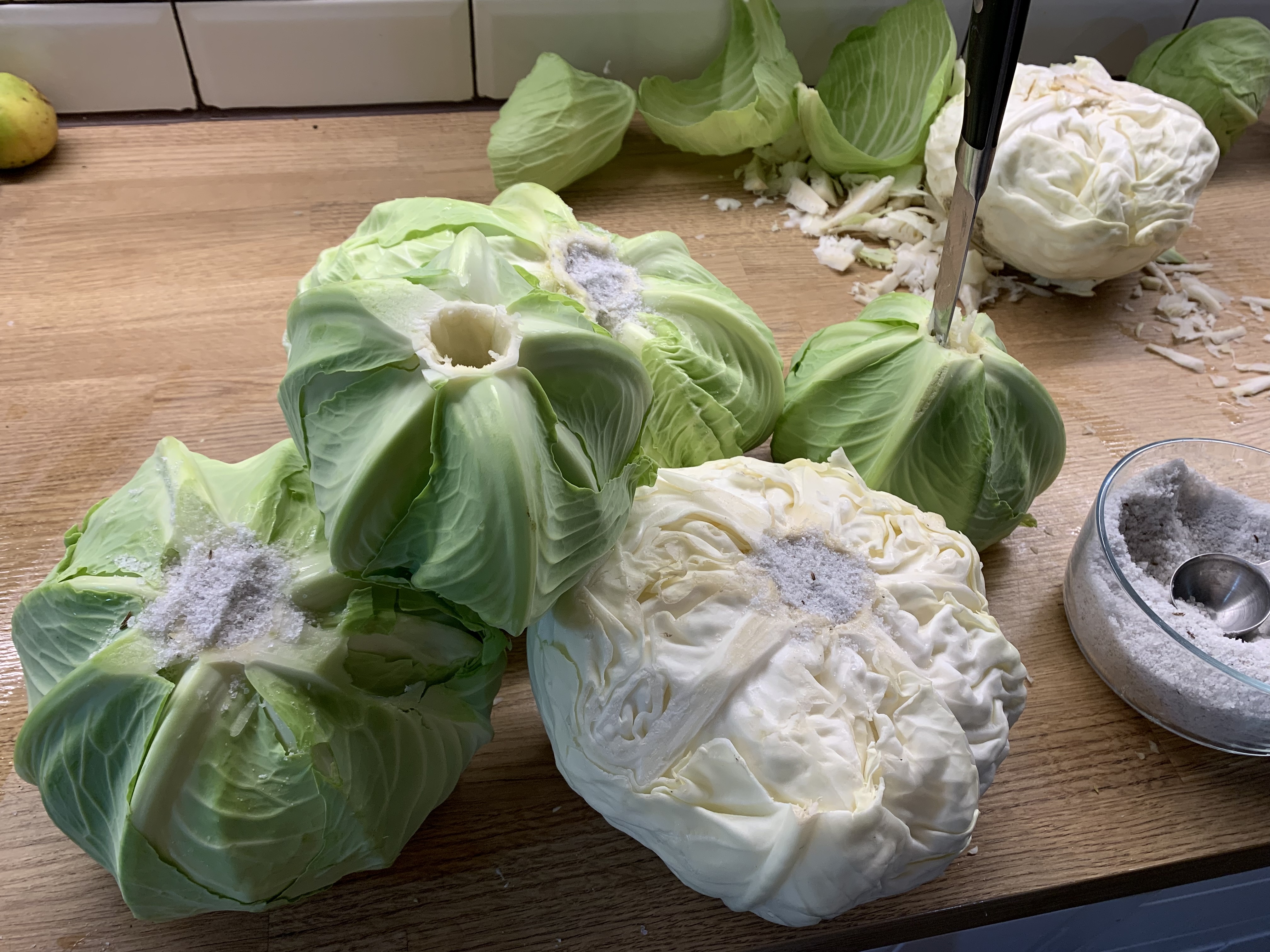
I've preserved cabbage by fermentation in two different ways this winter.
Fermented cabbage (cut) is something I grew up on in Slovakia, and it’s something that is even common in stores. When I moved to Romania, it was surprising for me to learn that my husband’s family is also preserving cabbage, but they preserve the whole heads instead of cutting it up. We have made both types of cabbage last year with great success, so we’ve decided to repeat the fermentation this year.
The Tools
For our use, we’ve used a 17L water-sealed clay crock and 50L plastic barrel. We’ve used the crock for cut cabbage and the barrel for the full heads. While it’s possible to ferment cut cabbage in normal glass jars or a plain barrel, I personally prefer the crock, as it makes the fermentation process and monitoring much easier. I’ve found an image that explains the anatomy of a crock.
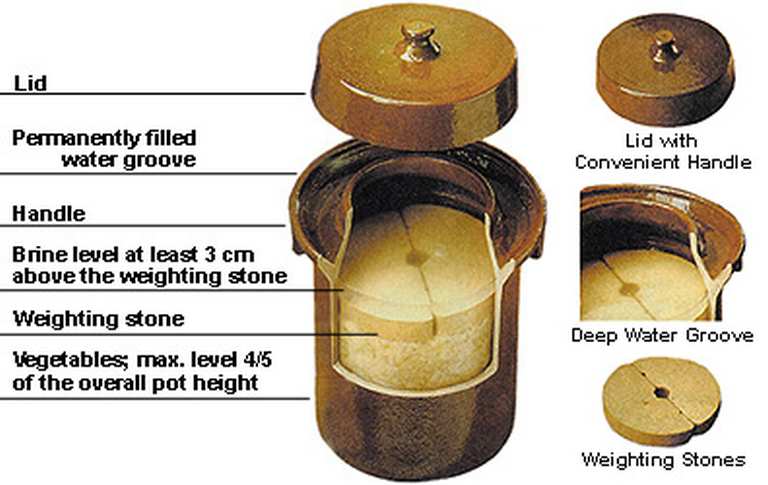
Breakdown of a Water-Sealed Crock (source)
Besides the vessels for the cabbage you will need something to weight them down (we have a bowl in the barrel, weight stones and some wood pieces in the crock), and tools for cutting the cabbage. We have an ancient looking mandoline we used for our cabbage.
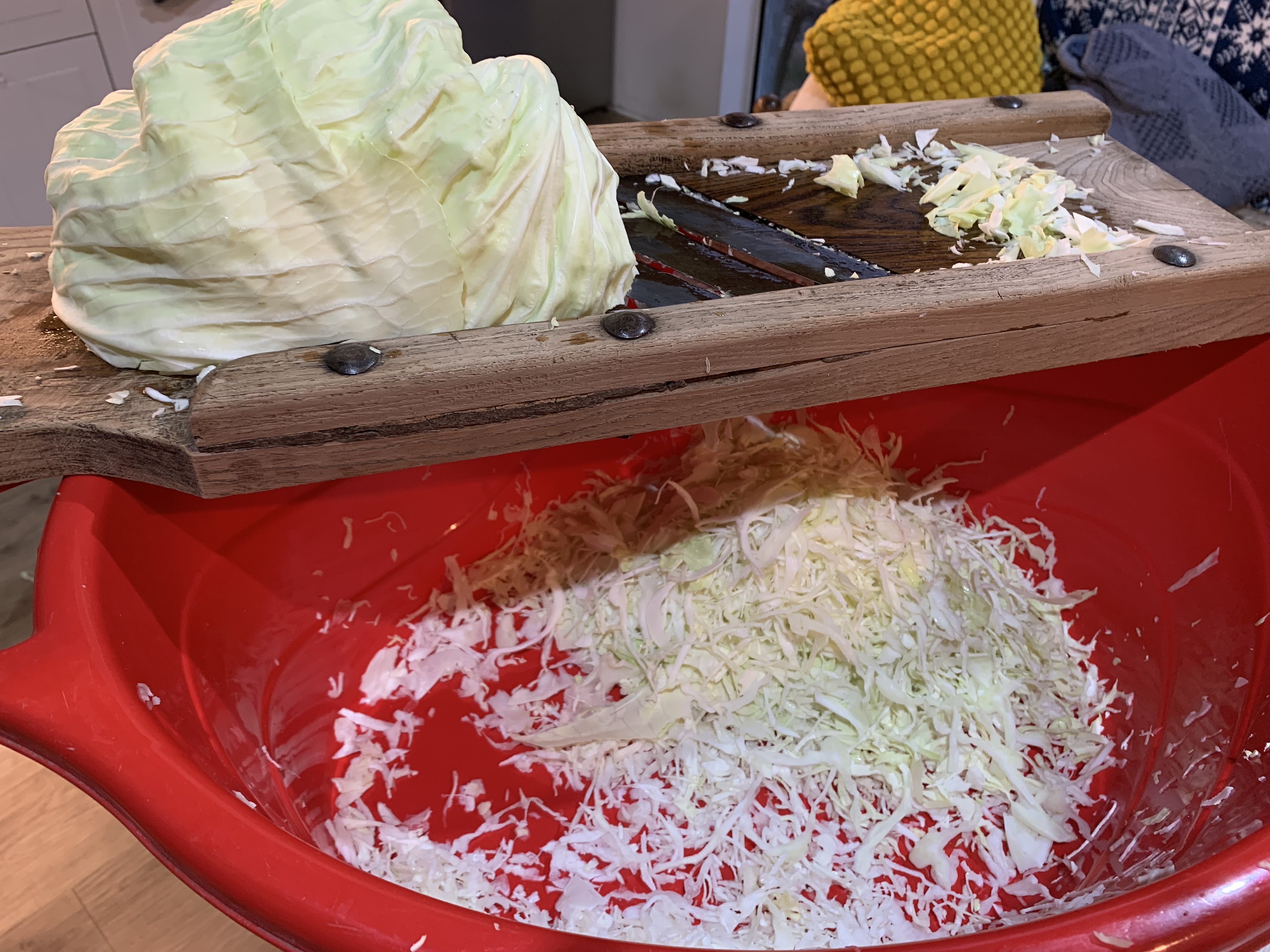
The Mandoline we used for the cabbage
The Cut Cabbage
I cut the cabbage on the mandoline, and pushed it down into the crock 1 kg of cabbage and 18 g of salt at a time. Every few kilograms of cabbage I added some apples, onion and bay leaves to enhance the flavor.
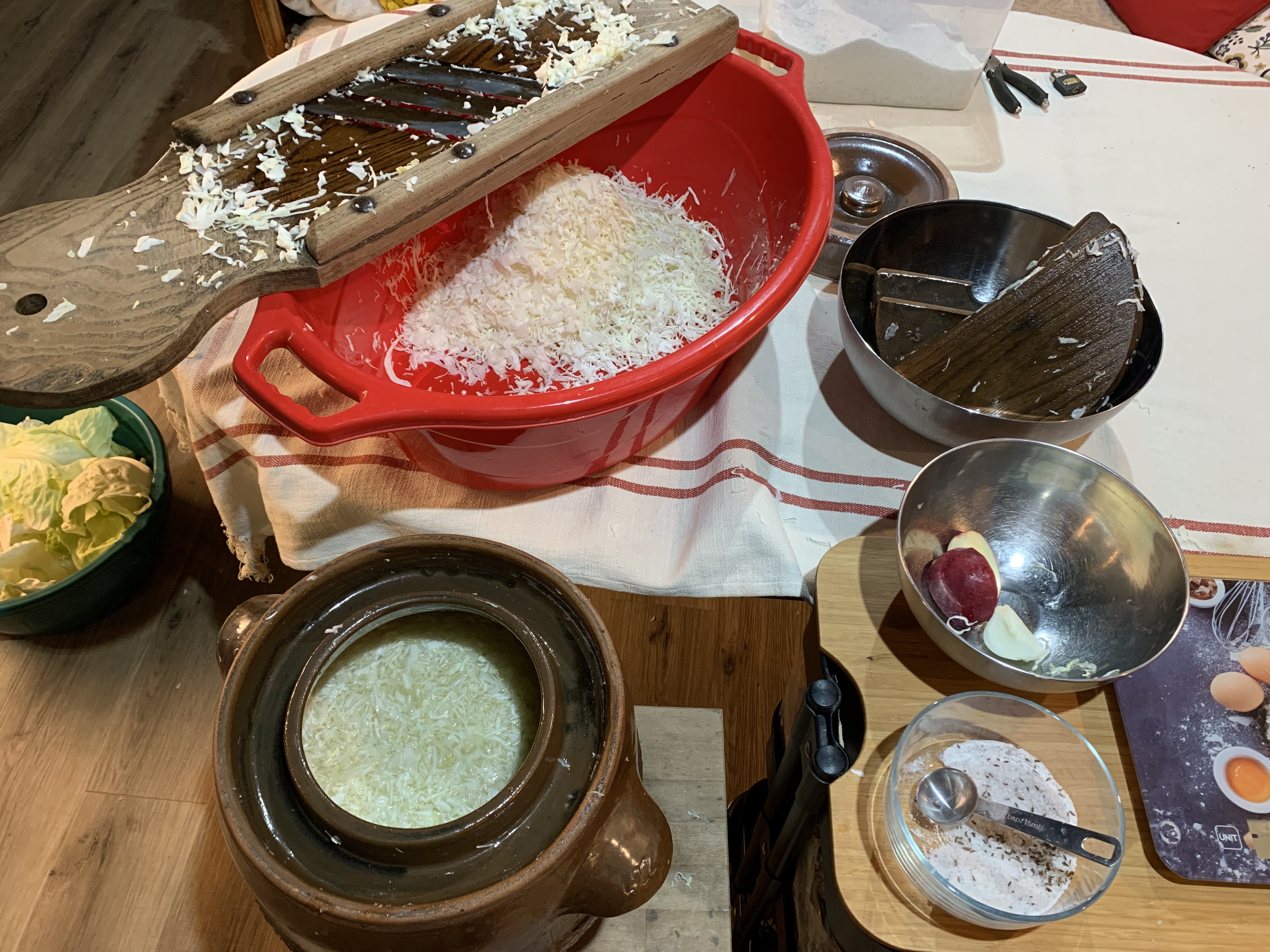
Setup for the cabbage packing
When the crock was full, I pushed the cabbage down (by the time it was full, it had released a lot of juice out). I also added water into the groove of the crock and closed it with the lid. The crock was placed in a cold place in the house, and in the following weeks I was able to hear bubbles being released a the fermentation process is ongoing.
My plan with the cut cabbage is to let it ferment for a couple weeks, then take some out for eating raw, and jar the rest for winter / spring.
Full Cabbage Heads
The whoe cabbage heads are more of my husband’s project. We cleaned up the cabbage and cut a hole into each head. Then we added salt into the hole and squeezed the cabbage into the barrel.
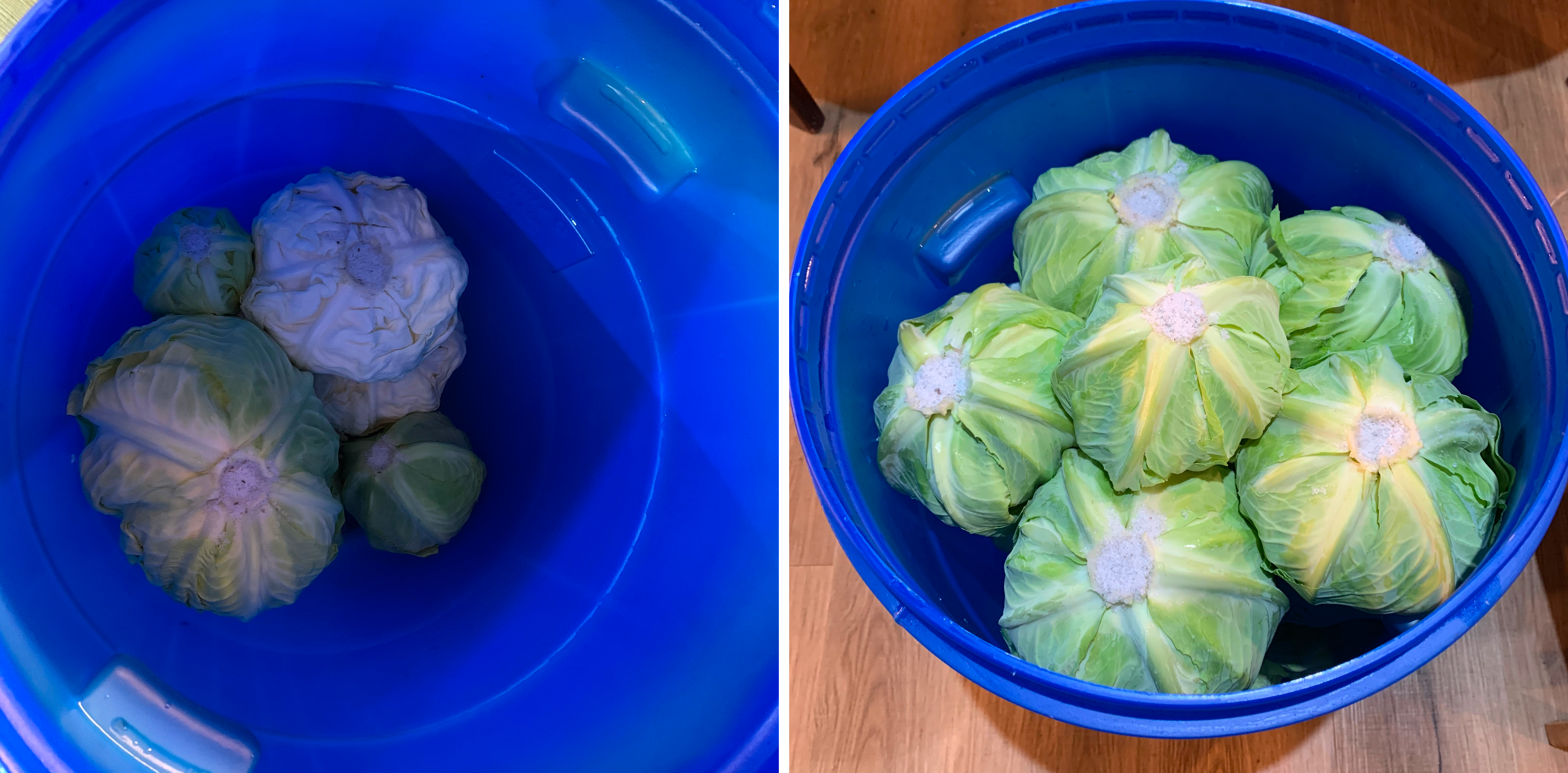
The full cabbage heads
After that, we left the salt melt for a few days, and we filled the barrel with water and weighted them down.